FAKS' 5 Guiding Principles
- Help kids become independent by keeping them active in school
and social life, and preparing them to be self-sufficient by 18. - Involve families in the process and make sure they have a vested
interest. - Provide coordinated care, including surgery, prosthetics, family
education, and social support. Connect families with others in similar
situations. - Use funds thoughtfully by asking board members to cover their own travel expenses, and spending on cases of children whom Medical professionals deem most likely to walk with prosthetic or orthotic help, ensuring resources are directed where they can have the greatest impact.
- Maintain strong partnerships with prosthetic clinics in the host
countries.
Here are some kids whose cases exemplify these principles:
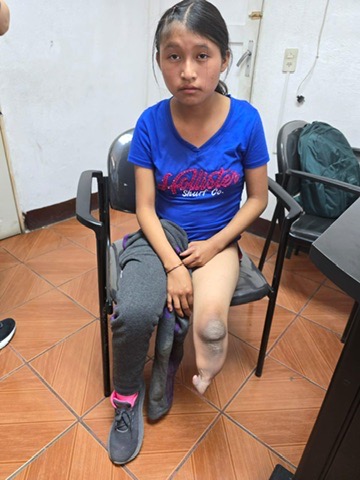
Adela Leticia, 15, has been shy and withdrawn due to being born without a
foot on one leg. She taught herself to walk on her knee, keeping her other
knee bent to balance her legs. A team of surgeons, a prosthetist, and her
family worked together to create a usable stump. The prosthetist fitted her,
and FAKS staff educated her and her family. Now, Adela is more outgoing
and functional. She will graduate from the FAKS program in three years.
Her story reflects Guiding Principles 1 and 3.
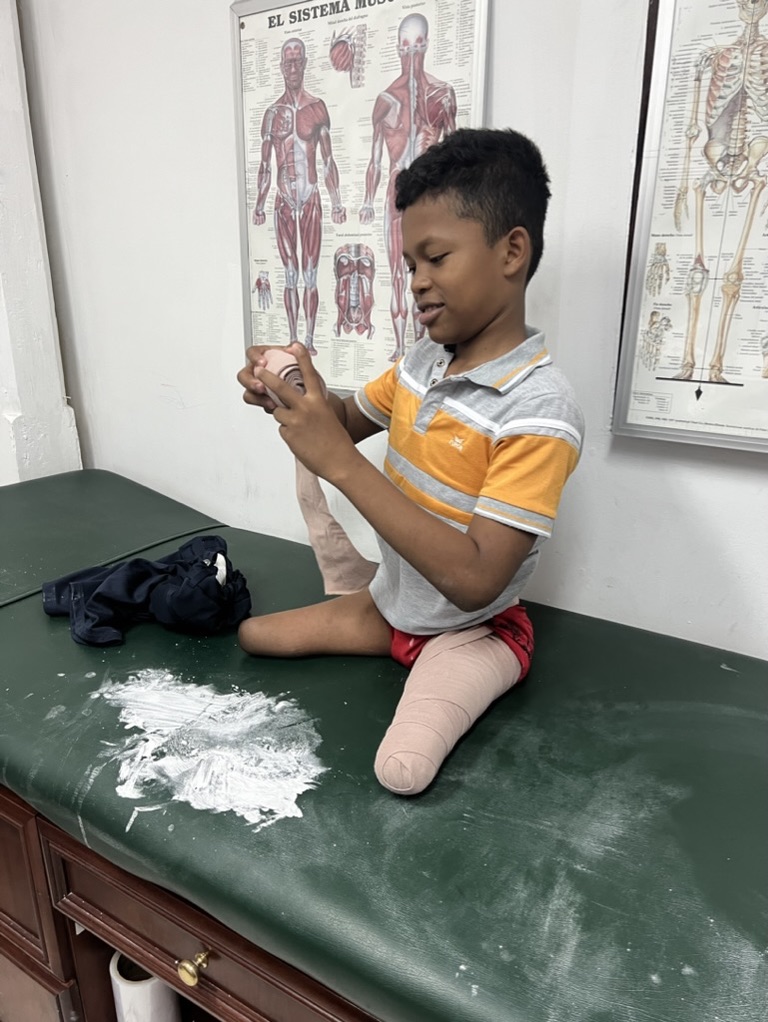
Hudson, an 11-year-old boy from a remote area of Honduras, is part
Miskito Indian and speaks that language. Born with severely deformed
lower legs, his only option to walk normally was to have his legs surgically
removed. While recovering, FAKS board members traveled to Honduras at
their own expense to partner with a prosthetic clinic. Hudson was fitted with
full-length prostheses with articulated knees. With continued support from
FAKS and his prosthetist, he will be self-sufficient in seven years. His case
reflects all five principles.
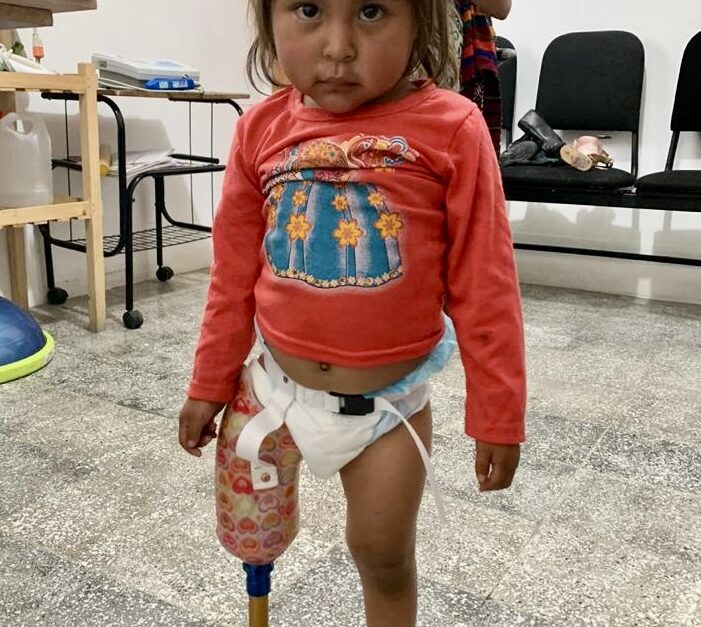
We met Maria Christina when she was an infant, eight years ago. Her
parents brought her to an orthopedic clinic, hoping for help. Two FAKS
board members traveled to her home in the Guatemalan mountains, where
her family lived in severe poverty in a one-room house with a dirt floor and
no glass in the windows. Her father works seasonally in Mexico and grows food near their home. As Maria has grown, she’s been fitted with several
prostheses. FAKS has stayed in touch with the family, who have shown
commitment by spending time and money to get her to appointments. Her
story reflects principles 1, 2, 3, and 5.
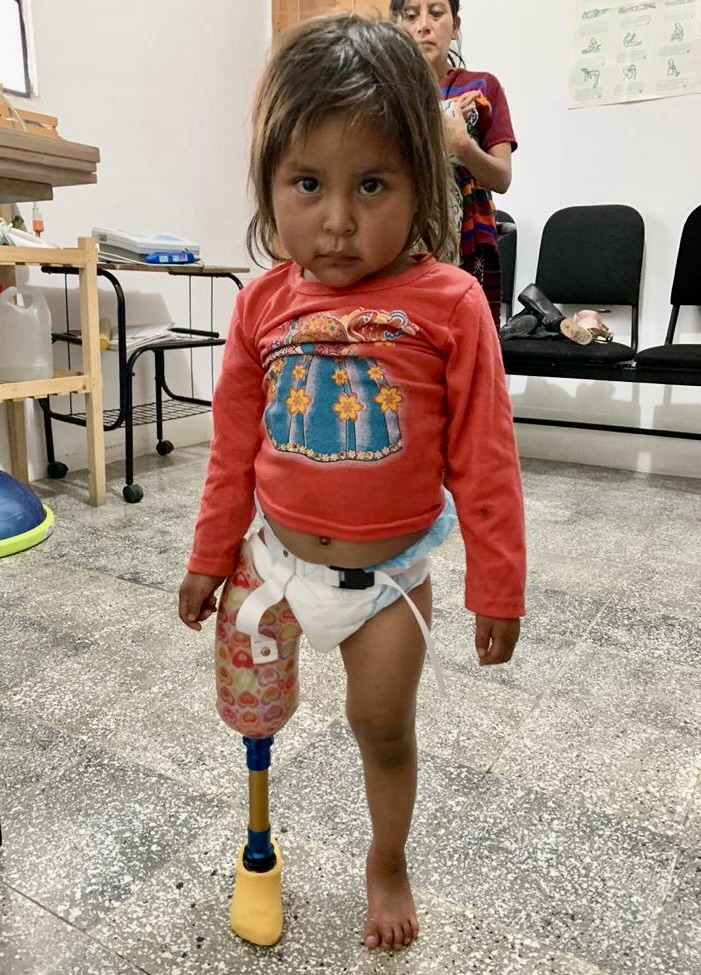
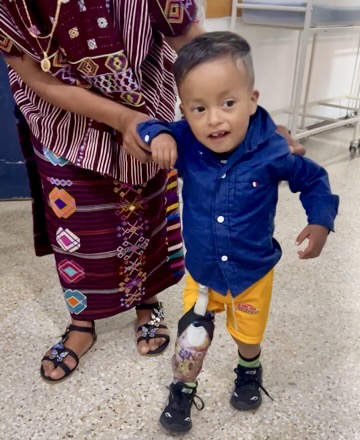
Esvin, just two years old, is starting his journey with a prosthesis. His family
brought him to FAKS from their mountain home, where they met other kids
with prostheses and their families. This support network has helped them
feel less isolated and more connected to the FAKS family. They are actively
involved in Esvin’s learning to walk, paying for transportation to the clinic
and even building him a set of parallel bars for physical therapy at home.
Esvin will likely never remember not being able to walk.
Thanks to strong relationships with clinics, surgeons, patients, and families,
along with families’ commitment to help pay for care, FAKS has helped 50
kids become functional at home, in school, and in society—and they will
grow into functional adults